Bright or inconsistent lighting
Glare, flicker and sharp changes can increase discomfort and fatigue.
Good accessibility recognises variation, avoids assumptions and gives people more ways to participate comfortably.
Neurodiversity recognises differences in how people think, process information and experience the world as natural variations of the human brain.
Autism, ADHD, dyslexia, dyspraxia and Tourette syndrome are among the conditions commonly associated with neurodiversity. But no label describes every part of a person’s experience.
Not every autistic person experiences an environment in the same way. Not every person with ADHD has identical needs. Good accessibility creates options and reduces unnecessary barriers rather than relying on a single assumed solution.
Our senses continually provide information about the world. For some people, the volume, intensity or combination of that information can become difficult to filter or process.
The environment can either add to that load or make it easier to manage.
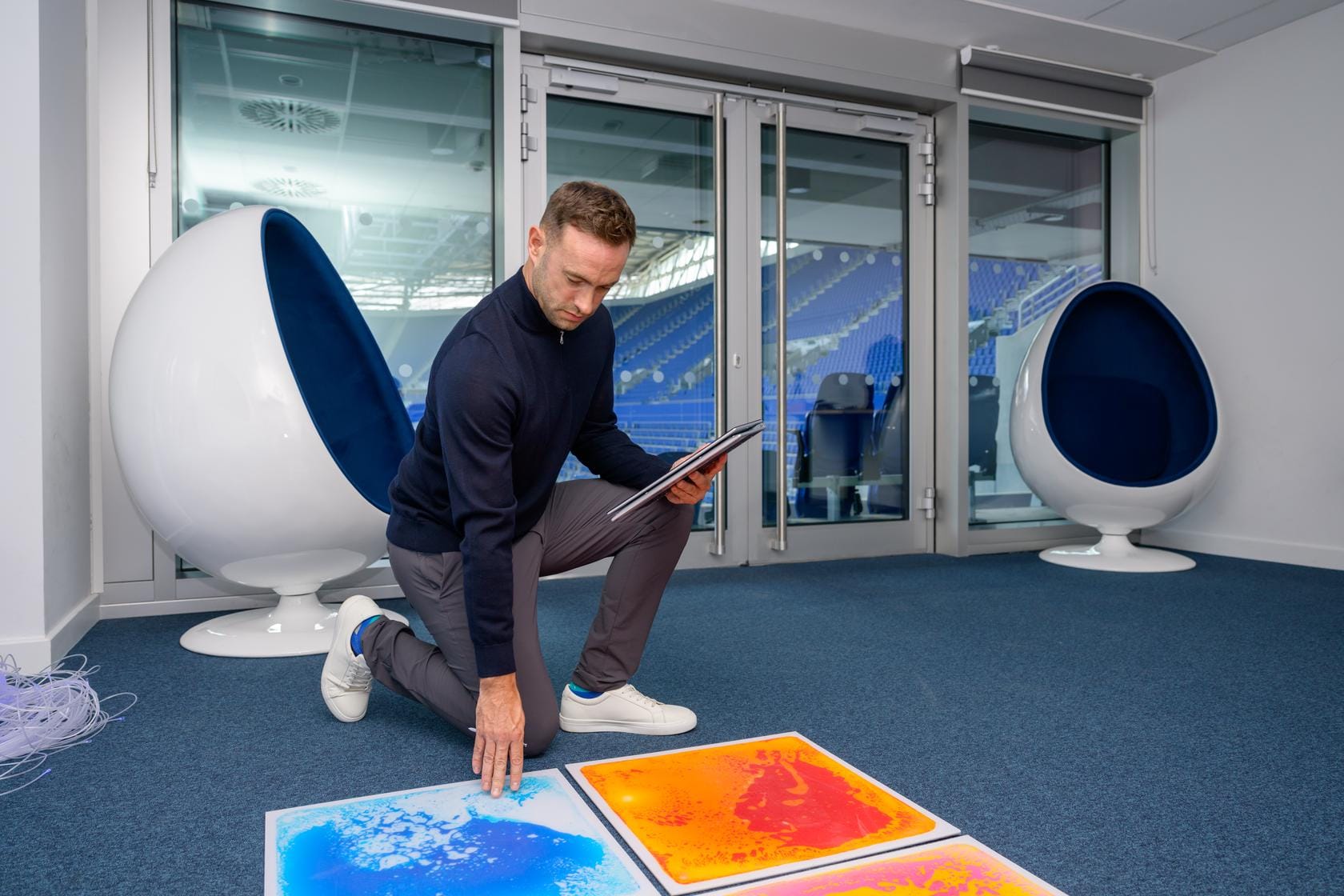
Glare, flicker and sharp changes can increase discomfort and fatigue.
Background conversation, announcements and equipment noise can be hard to filter.
Unclear routes, unexpected changes and missing information increase uncertainty.
Busy circulation and limited personal space can make regulation more difficult.
Cleaning products, food, fragrance and poor ventilation can become overwhelming.
Dense signage, unclear language and inconsistent instructions create avoidable friction.
People need somewhere accessible to pause, recover or reduce stimulation.
A thoughtful environment still depends on calm, informed and respectful human support.
Sensory challenges may also be temporary or situational. Anxiety, migraine, concussion, dementia, fatigue and periods of high stress can all change how a person experiences an environment.
Offer more than one way to wait, work, move or engage.
Help people anticipate what will happen and where to find support.
Allow people to adjust stimulation or step away when needed.
Make inclusive support visible, consistent and easy to access.
Sensory accessibility is not about creating special treatment.
It is about removing unnecessary barriers so more people can engage confidently with the spaces and services they use.