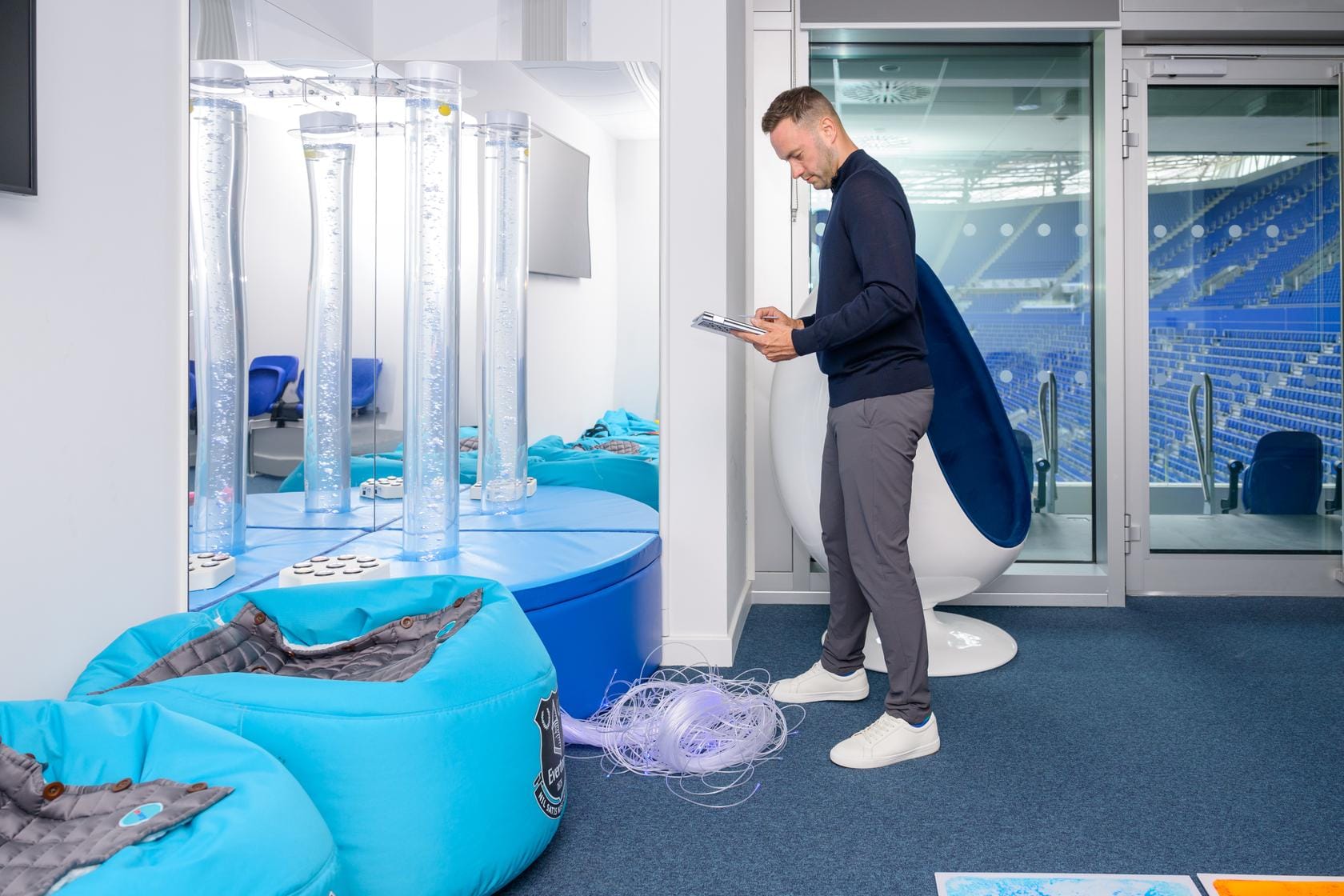
Contextual
Every environment is considered in relation to its purpose, scale, users and sensory profile.
Structured assessment and practical recognition for organisations creating thoughtful, accessible and genuinely supportive sensory environments.
Most public and commercial spaces aim to be inclusive, but inclusion is rarely measured, tested or consistent.
For neurodivergent people, families and anyone with sensory needs, that inconsistency can be the difference between comfort and overwhelm, participation and withdrawal.
Zensory Accreditation provides a structured way to understand what a sensory-considerate environment looks like, how it performs in practice and where meaningful improvements can be made.
Unlike a simple checklist, the framework considers interacting environmental, operational and human factors, from sound and movement to staff awareness, communication and access to retreat.
The framework brings together published research, inclusive-design guidance, lived experience and learning from work in real environments. It translates established knowledge into a structured review that organisations can use in practice.
Our accreditation does not compare one environment with another. It examines how effectively an organisation understands and responds to the sensory demands of its own setting.
A stadium, hospital, heritage site and classroom each present different challenges. Zensory therefore assesses whether an organisation has taken proportionate, practicable steps to understand those demands, communicate them clearly and support the people who experience them.
Every environment is considered in relation to its purpose, scale, users and sensory profile.
We assess meaningful action within real constraints, including space, budget, operations and logistics.
The emphasis is on whether people can prepare for, access, navigate and participate in the environment with greater choice, clarity and confidence.
The framework brings relevant evidence and experience together, translating established knowledge into a practical assessment that helps organisations identify barriers, understand people’s experiences and make meaningful improvements.
Research shows that noise, lighting, visual complexity and unpredictability can significantly affect comfort, regulation and participation.
Recognised approaches to accessible design inform how we consider acoustics, spatial layout, transitions, sensory zoning and predictability. Relevant recognised guidance includes PAS 6463:2022, Design for the mind. Neurodiversity and the built environment. Guide, published by BSI.
Accessibility is about more than physical access. We consider how spaces communicate, feel and function, including lighting, signage, navigation and sensory demand.
A contextual approach allows the framework to be applied across stadiums, education, healthcare, visitor attractions and public spaces.
Published evidence provides a foundation, while lived experience and practical observation keep recommendations grounded in the realities of the people using each space.
The result is an evidence-informed, experience-led framework designed to help organisations move from awareness to meaningful improvements in accessibility.
The process is collaborative, evidence-informed and adapted to the type and scale of your environment.
We understand your organisation, environment, audiences, objectives and existing accessibility work.
A structured review of the physical environment, visitor journey and operational practice, onsite or remotely where appropriate.
A detailed report identifies strengths and prioritises improvement opportunities by impact and feasibility.
Organisations meeting the relevant standard receive formal recognition, a digital accreditation mark and guidance on communicating their achievement.
Accessibility evolves. We support the next stage of development rather than treating recognition as the end of the journey.
The award level reflects how fully sensory accessibility has been built into the environment, the visitor experience and everyday ways of working.

A strong starting point with the foundations for practical progress.

Meaningful improvements demonstrated across the environment and experience.

Sensory accessibility embedded as an organisation-wide commitment.
The framework can be calibrated to stadiums, workplaces, schools, healthcare, hospitality, transport, visitor attractions, civic buildings, restaurants, play spaces and more.
Explore sectors